

Gem Squash
Nutritional Benefits
Gem squash is low in Saturated Fat and Sodium, and very low in Cholesterol. It is also a good source of Protein, Vitamin A, Thiamin, Niacin, Phosphorus and Copper, and a very good source of Vitamin C, Vitamin K, Riboflavin, Vitamin B6, Folate, Magnesium, Potassium and Manganese.

The plant
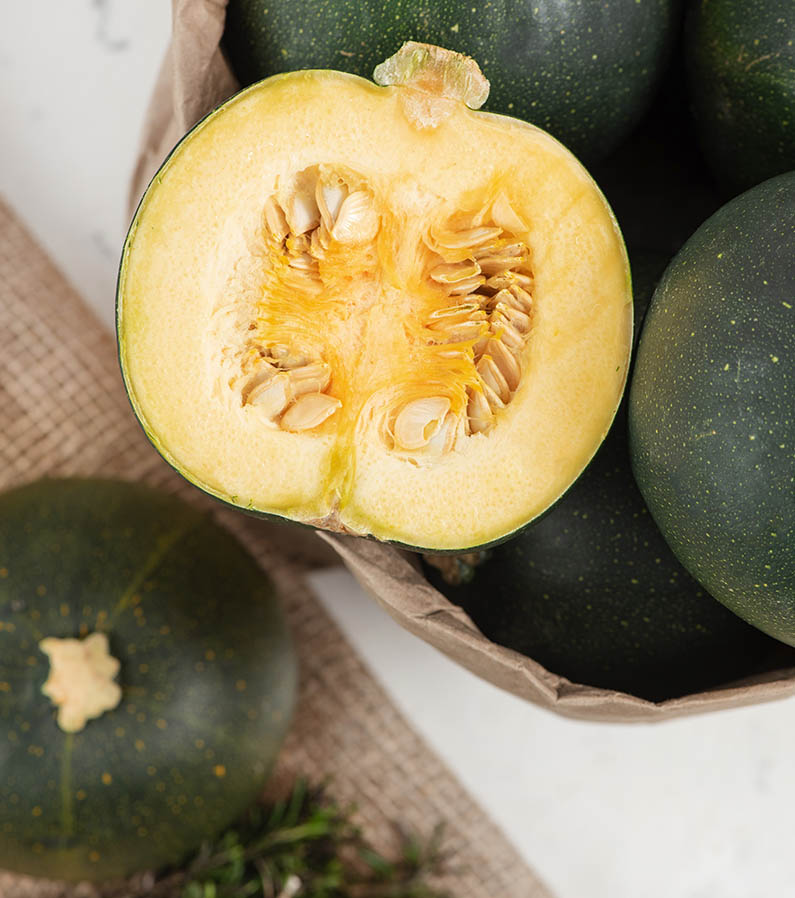
Gem squash is a variety of summer squash that was domesticated from two wild varieties; Cucurbita texana found in the southern and central United States and Cucurbita fraterna found in Mexico. The dark green spherical fruit, when fully ripe, is about the size of a softball. The young fruit is often harvested before it is ripe (about golf ball size or tennis ball size) due to its having a more delicate flavor and texture.
The fruit needs to be fully cooked to render it palatable. It is commonly served as a vegetable in South Africa, often boiled or baked.
Soil type and pH
Like most veining vegetables, squash grows best in sandy, fertile soils with a pH between 6.0 and 6.5.
Growth period
Gem squash takes between 10 and 12 weeks to the first fruit being ready for harvest. Baby gems can be harvested from as early as 6 weeks from planting.
Irrigation
An average of between 30 mm and 40 mm of irrigation throughout the growing season should be enough. This should be increased or decreased depending on the weather conditions. It is best to install and irrigate with drip as this keeps the leaves dry and healthy and evaporation to the minimum. Fertiliser administered directly to the root zone is also more efficient.
Care should be taken to not over irrigate as gem squash is prone to root diseases if waterlogged root zones are created. If sprinkler irrigation is used, try to ensure that the leaves are dry before nightfall to reduce the chance of fungal infections taking hold. It is also advisable to constantly monitor soil moisture and the most efficient is to install soil moisture meters.

Squash bugs
Squash bugs are a common pest, and can cause acorn squash diseases. They are usually gray or brown in color, although some are almost black. Squash bugs are usually about the size of a dime and travel in packs. They will suck the juices from the plant and will actually attack the squash itself, although they usually lay their eggs on the underside of the leaves.
Vine borers
Vine borers are a common garden pest and can do some serious damage. They will attack any summer or winter squash plant, along with cucumbers and pumpkins. They will bore into the main stems at the base of your acorn squash plants, sucking out the juices and eating the plants themselves. Once inside the stems, they will continue eating away at your plants from the inside out.
Cucumber beetles
Some common acorn squash plant problems are caused by cucumber beetles. The striped cucumber beetle has black and yellow spots on its back. The spotted cucumber beetle has a yellow back with black spots. They love to chew on young acorn squash leaves and stems. Cucumber beetles also carry wilt diseases from plant to plant. Fortunately, these pests can be controlled with common insecticides including sprays and dust. Diazinon and Malathion are common chemicals that will kill cucumber beetles. Apply products that contain these pesticides according to the manufacturer’s instructions. Most can be applied soon after the seedlings emerge and throughout the growing season. Organic products including soap sprays are also available at most garden centers.
Environmental
Sometimes acorn squash plant problems can be attributed to the environment. If the pH in the soil is low, the plants can have trouble absorbing nutrients. Extremely hot or cold weather can impact the plants to the point that they show signs of stress – yellowing leaves, wilting, etc… This can be especially true if you get big temperature swings from day to night. Also, many new gardeners make the mistake of over-watering. If you think your plants need water, spend a minute and dig down about 4 inches into the soil. You want the soil at this depth to be moist, but not soggy. If it soggy, let it dry out for a few days and check again. If it’s bone dry, you need to water.
Diseases
If you’ve ruled out insect problems, you may be dealing with a fungal infection. Some diseases that affect acorn squash plants are wilt disease, powdery mildew, downy mildew and scab disease. These are usually identified by a powder like substance on the leaves or stems. There may also be visible black spots or splotches on the leaves themselves. Most acorn squash diseases can be avoided by choosing disease resistance varieties. They can also be controlled with soap sprays or fungicides that are usually available at most garden centers.

Fertilisation Timing
The first fertiliser is administered before planting into the topsoil of the plant area. Depending on the outcome of the soil analysis and average 600 kg per hectare of 2:3:4 (30) can be administered. This is available to the seedlings immediately and will stimulate initial growth and root development. About 4 weeks after planting when the plants have settled and are growing well a second application of 350 kg per hectare of 2:3:4 (30) can be cast along the plant rows and washed in with an irrigation.
A third application of Nitrogen can be applied if the growth of the plant is problematic and requires it. About 250 to 400 kg per hectare of LAN (28) would normally be sufficient. The equivalent in liquid fertiliser through a drip irrigation system could also apply if drip irrigation is installed.
Sowing and Planting Time
The best time is when the soils start warming in the spring and the frosts have passed. This is normally the end of August beginning of September. Gem squash can be planted until as late as February as long as the weather is correct. They have been planted and harvested into the winter months in areas free of frost.
Planting Method
Gem squash planting can be by direct planting of the seed by mechanical planter or by hand on smaller plots. Planting of gem squash seedlings is also done by producing in seed trays in greenhouses during the last days of winter and when the weather is suitable to plant the seedlings out into the field. By planting seedlings the grower or farmer can save time and start to harvest 2 to 3 weeks earlier.
Fresh from the Kitchen
using Gem Squash

Blue Cheese Baked Gems
These make a perfect veggie dish on their own, but are also delicious with roast chicken. If you braai them, they’ll take on a lovely smoky flavour and it is an easy side dish with no extra dishes to clean.
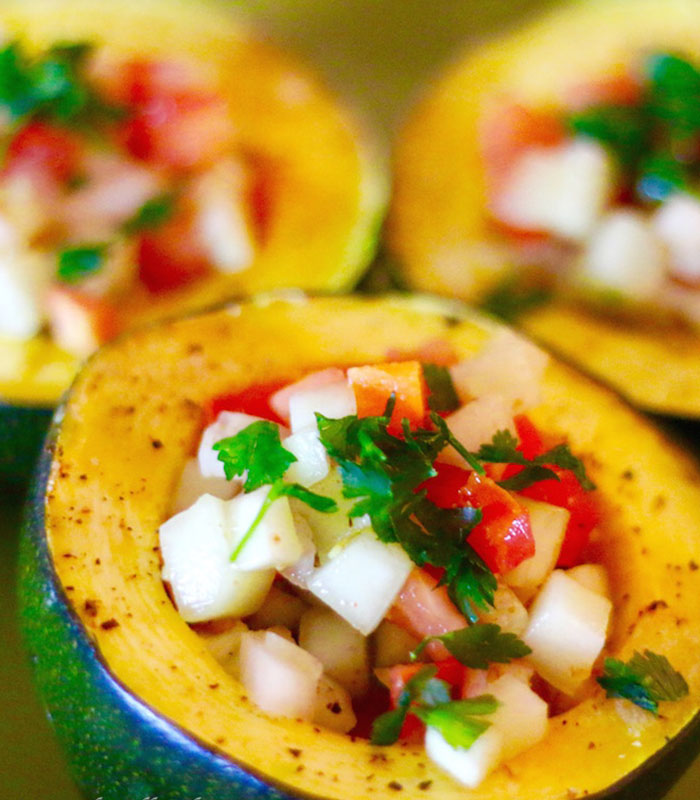
Gems with Chunky Salsa
After cooking, the shell hardens like a bowl and the insides become soft which can be eaten on its own with a little seasoning or with a crunchy and spicy filling like this spicy chunky salsa to give the flavours and textures a twist.
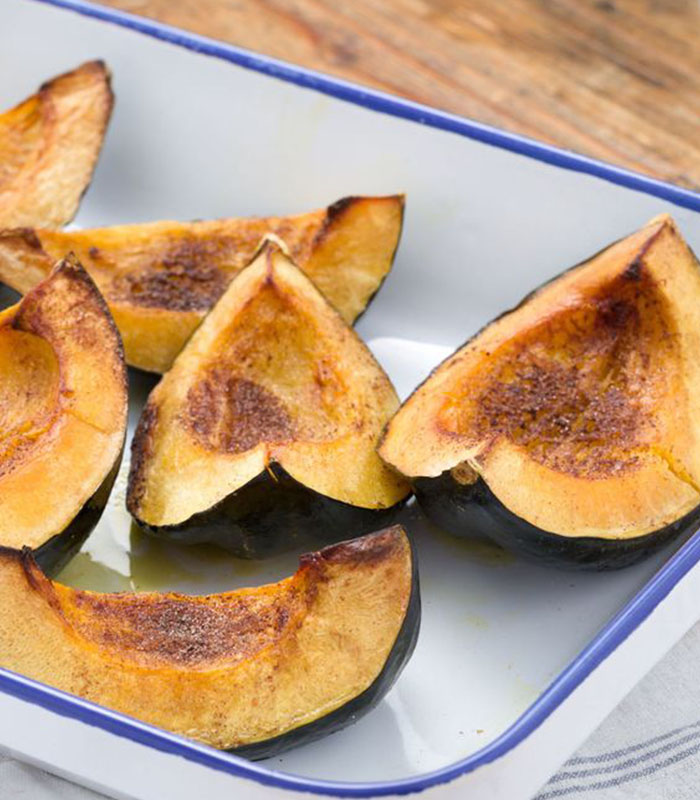
Buttery Cinnamon Gems
A savory-oh-so-sweet side for your a fabulous feast that really brings out the natural flavour of gems. This recipe is quick and easy to prepare but needs a bit of time in the oven.

Contact Us
Complete the form below
or call us on +27 (0)11 825 0659

We'd like to hear from you
Our team of experts is on hand to answer your questions.
In compliance with the new POPI Act, please take note of our Privacy Policy