

Butternut
Nutritional Benefits
The butternut squash is a great source of fibre, as well as vitamins including A, C, E and B vitamins along with minerals such as calcium, magnesium, and zinc.

The plant
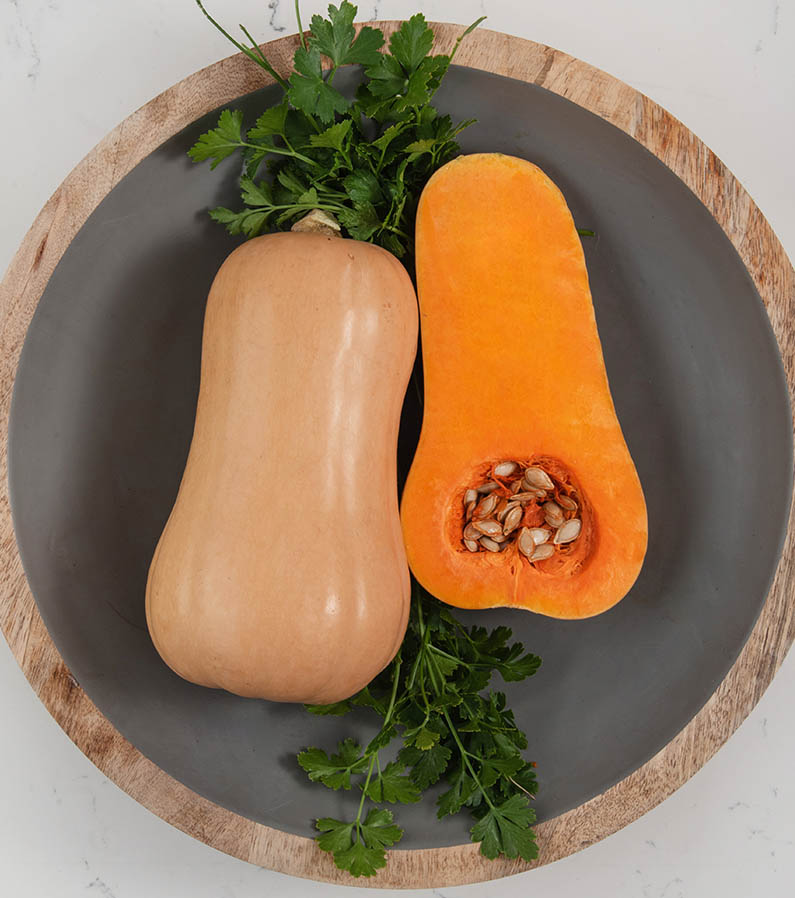
Butternut squash known in Australia and New Zealand as butternut pumpkin or gramma, is a type of winter squash that grows on a vine. It has a sweet, nutty taste similar to that of a pumpkin. It has tan-yellow skin and orange fleshy pulp with a compartment of seeds in the blossom end. When ripe, it turns increasingly deep orange, and becomes sweeter and richer. It is a good source of fiber, vitamin C, magnesium, and potassium; and it is a source of vitamin A.
Although botanically a fruit, butternut squash is used culinarily as a vegetable that can be roasted, sautéed, toasted, puréed for soups such as squash soup, or mashed to be used in casseroles, breads, muffins, and pies.
Soil type and pH
Butternut squash plants grow best in slightly acidic soil that has a pH of 6.0 to 6.5.
Growth period
Butternut growing period is normally between 12 and 15 weeks from planting of the seed to the first butternuts being ready to harvest.
Irrigation
Butternut has quite a deep root system with some roots growing down to a meter if the soil is good and well prepared and this makes it possible for the plants to cope with some level of moisture stress, however it is still important to ensure that the soil remains moist. Irrigate between 25 mm and 35 mm per week during the growing period. Adequate water in the root zone is essential for good flowering and fruit set.

Squash bugs
Squash bugs are a common pest, and can cause butternut squash diseases. They are usually gray or brown in color, although some are almost black. Squash bugs are usually about the size of a dime and travel in packs. They will suck the juices from the plant and will actually attack the squash itself, although they usually lay their eggs on the underside of the leaves.
Vine borers
Vine borers are a common garden pest and can do some serious damage. They will attack any summer or winter squash plant, along with cucumbers and pumpkins. They will bore into the main stems at the base of your acorn squash plants, sucking out the juices and eating the plants themselves. Once inside the stems, they will continue eating away at your plants from the inside out.
Cucumber beetles
Some common acorn squash plant problems are caused by cucumber beetles. The striped cucumber beetle has black and yellow spots on its back. The spotted cucumber beetle has a yellow back with black spots. They love to chew on young acorn squash leaves and stems. Cucumber beetles also carry wilt diseases from plant to plant. Fortunately, these pests can be controlled with common insecticides including sprays and dust. Diazinon and Malathion are common chemicals that will kill cucumber beetles. Apply products that contain these pesticides according to the manufacturer’s instructions. Most can be applied soon after the seedlings emerge and throughout the growing season. Organic products including soap sprays are also available at most garden centers.
Diseases
If you are sure you don’t have pest problems in your garden, there’s a small chance you might actually be dealing with butternut squash diseases. Some diseases that affect squash plants are wilt disease, powdery mildew, downy mildew and scab disease. These are usually identified by a powder like substance on the leaves or stems. There may also be visible black spots or splotches on the leaves themselves. Most butternut squash diseases can be avoided by choosing disease resistance varieties and by controlling pests and keeping the garden clean and weeded. They can also be controlled with soap sprays or fungicides that are usually available at most garden centers.

Fertilisation Timing
Start preparing the plant area at least a month before planting. If the soil requires composting, start by applying approximately 20 m³ to 30 m³ of manure or compost per hectare and ploughing this into the top 300 mm of soil. The soil is then left to settle with the compost and then the plant rows are prepared. Once the seeds have germinated and the young seedlings have established themselves, apply between 400 and 600 kilograms of 2:3:4 (30) per hectare along the plant lanes. A final application of nitrogen in the form of 250 kilograms of LAN (Limestone Ammonium Nitrate) must be done five to six weeks after planting to boost fruit development once the first butternuts have formed.
Sowing and Planting Time
Butternuts are a warm weather vegetable, thus planting occurs from early spring to mid-summer. In South Africa planting starts in August where the temperatures have started to increase after the winter. In areas where there is the risk of frost and low temperatures still occurring, planting will only start in September. Planting can extend into early December if the mid-summer temperatures are not regularly above 35°C.
Planting Method
Seeds are planted by hand and by mechanical planters. The butternut seeds are planted directly into the prepared planting rows. Seeds are planted 2.5 cm to 3 cm deep. At each seed site plant 2 seeds 10 cm apart to ensure coverage. Excess butternut seedlings can be removed and planted elsewhere if both seeds have germinated. The strongest can be kept.
Fresh from the Kitchen
using Butternut

Butternut Soup
A super creamy butternut squash soup recipe with the option of roasting your squash is pure comfort in a bowl. Make it fresh the day of serving; make it ahead or make it for weekly meal preps!

Butternut Fritters
Let’s be honest and tell you that these are hot, crispy, salty and the ultimate way to sneak squash onto the plates of even the most veggie-averse eaters.

Roasted Butternut
Whether you are looking for a simple side to bring to Christmas dinner, or if you want to shake up your weeknight roasted vegetable routine, this roasted butternut squash hits the spot.

Contact Us
Complete the form below
or call us on +27 (0)11 825 0659

We'd like to hear from you
Our team of experts is on hand to answer your questions.
In compliance with the new POPI Act, please take note of our Privacy Policy